


Average Sex Time: What’s Normal in Bed?
Table of Contents The Quick Answer What Average Sex Time Actually Measures W
Read more
Ever thought about making a mould of your own penis? Believe it or not, you can—and you don’t need a lab coat, DNA samples, or a team of scientists to do it. With a DIY penis mould kit, you can create a personalised silicone replica right at home.
Maybe you want to surprise your partner with a playful keepsake, or just try something fun and a little cheeky for yourself. Some people even gift it as a joke for friends who always ask for socks or cash!
Whatever the reason, creating your own clone can be a fun, memorable experience. But what exactly comes with a kit, how does it work, and is it really as tricky as it sounds? Don’t worry—we’ll walk you through everything step by step, so you can tackle the process with confidence and maybe even a laugh or two along the way.

When people say they want to clone a willy, they’re typically referring to a DIY casting process that uses fast-setting mould material and body-safe silicone to create a realistic penis replica. Although the phrase originated from a specific brand, it’s now widely used as a general way to describe DIY penis mould kits as a category.
These kits are designed to be approachable rather than technical. The goal isn’t to produce a factory-perfect item, but to capture real proportions—size, shape, and overall form—in a way that feels personal rather than mass-produced.
Understanding this early on helps set realistic expectations and avoids disappointment later.
Interest in cloning a willy isn’t driven by one single reason. In practice, people approach these kits for a range of overlapping motivations.
Standard toys are designed to appeal to the widest possible audience. A DIY penis mould kit creates something specific to one body, which is often the main attraction. For many, that personal detail matters more than visual perfection.
For couples spending time apart, a custom replica can act as a physical reminder that feels more personal than photos or messages. This is a common reason UK buyers look into clone-a-willy style kits.
Some couples enjoy the process as much as the result. Preparing the materials, following the steps, and waiting for the final reveal turns it into a joint activity rather than a simple purchase.
Search trends suggest many people researching how to clone a willy are first-time users. The appeal often lies in trying something new rather than collecting products long-term.

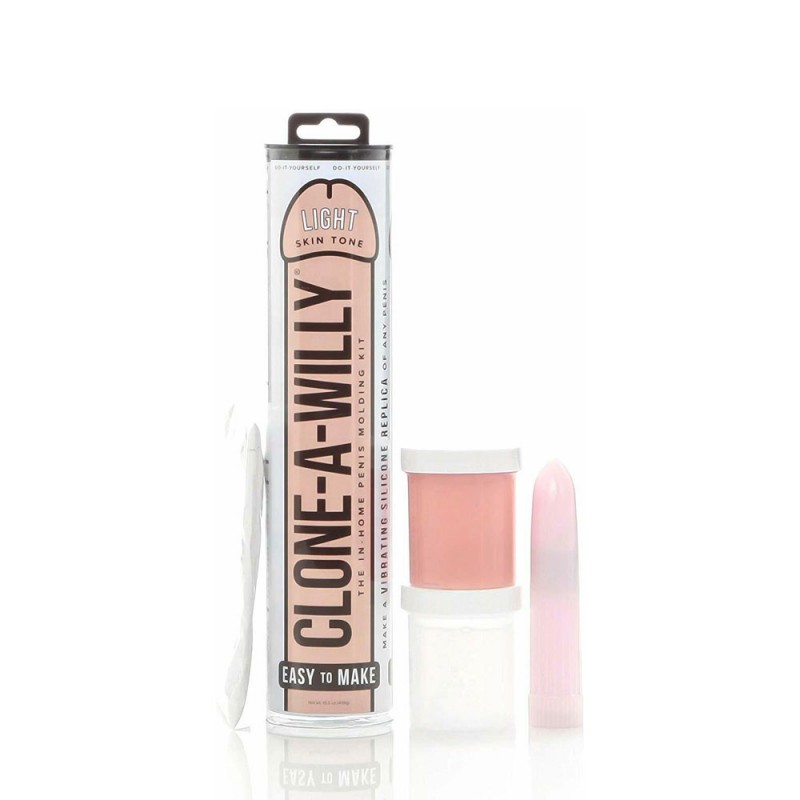
While contents vary slightly between brands, most kits designed to clone a willy include the same core components:
A moulding tube or container
Fast-setting mould material
Body-safe silicone (usually supplied in two parts)
A mixing stick or simple tool
Step-by-step instructions
Some kits may include extras such as a thermometer or optional accessories, but the essentials remain the same. Reading through the instructions before starting makes the process far smoother.
Preparation is one of the most overlooked parts of cloning a willy, yet it has a major impact on the final result. The moulding material sets quickly, leaving little time for adjustment.
Before mixing anything, it helps to gather a few household items:
A mixing bowl or container
A measuring cup
Scissors and a marker
Paper towels or a cloth
A phone or stopwatch for timing
Choosing a comfortable space where spills won’t matter—such as a bathroom or kitchen—is also a practical decision.
Although exact instructions vary, the basic process for cloning a willy at home follows a consistent pattern.

The mould tube is usually trimmed to match length. This ensures the mould captures what’s needed without excess space that can weaken the result.

The moulding powder is mixed with water until it reaches a thick, smooth consistency. Timing is important here. Mixing too slowly or for too long can cause the material to set before it’s poured.
Once poured into the tube, the impression is made immediately. Remaining still for a few minutes allows the mould to set properly and retain detail.
After removal, the mould needs time to stabilise. Most kits recommend waiting several hours before moving on to the silicone stage.

The silicone components are mixed until the colour is uniform, then poured slowly into the mould. Pouring gently helps reduce air bubbles and uneven texture.
Silicone takes longer to cure, often around 24 hours. Once fully set, the mould is carefully removed to reveal the finished replica.
DIY penis mould kits are not designed to create flawless, machine-polished products. Minor imperfections are common, especially for first-time users.
For many people, that’s part of the appeal. The finished result reflects something real—created through time, effort, and individual detail. Approaching the process with that mindset usually leads to a more satisfying experience.
Reputable kits are designed with body safety in mind, but instructions should always be followed closely. Only use the silicone provided, allow full curing time, and clean the finished replica thoroughly before use.
Cloning a willy can also be messy. Keeping paper towels, wipes, or an old towel nearby makes clean-up easier and less stressful.
If your penis is longer than average or you’re skipping the vibrator, you might need more silicone. Make sure you have enough to capture every detail.
A curve isn’t a problem. Trim the moulding tube where the bend is most noticeable and rotate the sections to match the curve. Tape them together for a stable mould.
Moulding powder and silicone can get messy. Work in a safe space like a bathroom or kitchen, and keep paper towels or a damp cloth handy for easy clean-up.
When comparing kits, price alone doesn’t tell the full story. Clear instructions are especially important for first-time users. Transparency around materials—particularly confirmation that the silicone is body-safe—also matters.
Extremely fast-setting kits leave little room for error, while more forgiving curing times tend to be easier to manage. For many UK buyers, discreet packaging and straightforward delivery are also key considerations.
Most problems come from rushing rather than faulty products. Common issues include skipping instructions, using water at the wrong temperature, moving during the impression stage, or removing the mould too early.
Taking time and following each step carefully usually makes a noticeable difference.
That depends largely on expectations. These kits reward patience, preparation, and a willingness to treat the process as hands-on rather than instant. They aren’t about speed or perfection, but about creating something personal.
For some people, that effort adds meaning. For others, a ready-made option may feel more practical. Understanding how cloning a willy works and what the process realistically delivers makes it much easier to decide whether a DIY mould kit is the right choice.
If you’re exploring other ways to enhance intimate experiences at home, you might also be interested in learning more about pussy pumps and how they work, another fun and personal addition to your collection.
By venusfun01VF
- Dec 30, 2025
- 0 Comments


Table of Contents The Quick Answer What Average Sex Time Actually Measures W
Read more
Table of Contents Classic Straddle Low Lean Seated Straddle Reverse Straddle
Read more
Adult wellness note: This guide is for consenting adults and general sexual w
Read more
Disclaimer: This article is for adult entertainment only It has no medical r
Read more
Table of Contents Is It Worth Buying? Design and Appea
Read more
To learn how to goon, think less about reaching a special trance and more abo
Read more
To clone a pussy usually means creating a physical copy of the visible vulva
Read more
Table of Contents The Practical Overview How Tail Plugs Are
Read more
The mating press position is a close, face-to-face variation of missionary in
Read more
If you want to increase girth size permanently, the honest answer is simple:
Read more
A rose toy looks soft and pretty, but the sensation can feel very different f
Read more
The Lovense Max 2 is worth buying if you want a male masturbator with strong
Read more
What Is a Pocket Pussy? A pocket pussy is a male masturbator made to feel mor
Read more
Squirting may happen when arousal, pressure on the front vaginal wall, and pe
Read more
Mutual masturbation means sharing self-pleasure with a partner, either by tou
Read more
Table of Contents Quick Verdict: Is Lovense Edge 2 Worth It? What Is the Lov
Read more
Sissification is a consensual adult kink or role-play practice where someone
Read more
VenusFun UK Guide How to Put on a Cock Ring Safely Put a cock ring on while t
Read more
Table of Contents What Is the Lovense Diamo? Quick Verdict: Who Diamo Is Bes
Read more
Table of Contents Quick Picks Finger Vibrator Comparison Venusfun Silicone F
Read more
Forniphilia is a BDSM practice where a consenting submissive is positioned, r
Read more
Anal fisting is often viewed as one of the most advanced forms of anal play
Read more
If you are looking up the Lovense Ferri, you probably want one answer before
Read more
Sissy chastity is not just about denial For many wearers, it is also about p
Read more
For many enthusiasts, a realistic dildo is only the beginning of the fantasy
Read more
For most people, the goal of sex is a climactic, explosive finish But in the
Read more
Many men want to know how to fuck a girl in a way that creates an unforgettab
Read more
In the world of modern intimacy, comfort is often the bridge to deeper connec
Read more
In the world of teledildonics, the Lovense Hush 2 stands out as a sophisticat
Read more
While the world of BDSM often focuses on the sharp edges of discipline, there
Read more
A dildo is already one of the most versatile toys out there, but once you add
Read more
When people first hear the term ass worship, they often assume it’s just anot
Read more
While often discussed in the context of male pleasure and prostate massage, a
Read more
In the heat of the moment, when your partner is seconds away from finishing,
Read more
Choosing the right blowjob machine isn't just about finding something that vi
Read more
There is something primally magnetic about the great outdoors If you’ve spen
Read more
Let’s be real: sometimes you’re in a pinch, curious about new sensations, or
Read more
Understanding the natural scent and taste of your body is a vital part of sex
Read more
Anilingus goes by many names Rimming, salad tossing, eating ass, peach munch
Read more
If you are on a quest for the ultimate climax in the UK, navigating the sea o
Read more
If you are looking to enhance your sexual stamina and provide additional stim
Read more
Whether you're looking to enhance pleasure, alleviate postpartum or menopausa
Read more
Understanding male anatomy often feels like navigating a maze of locker-room
Read more
In the Venusfun testing lab, we have put more butt plugs through their paces
Read more
Mastering the art of fellatio involves much more than repetitive physical mov
Read more
If you are on a quest for the ultimate climax, you have likely come across th
Read more
Most guys treat attraction like a transaction They think if they put in enou
Read more
A pussy pump or clit pump might sound super scary at first, but they are actu
Read more
If exploring positions like the waterfall has made you more curious about how
Read more